
The Problem
High-end travelers seeking off-grid disconnection are currently forced through high-friction booking platforms (like Airbnb or VRBO) that prioritize quantity over quality. This results in curation fatigue, users must sift through thousands of mismatched listings to find a single high-caliber, truly remote escape.
The Solution
Vanguard Escapes solves this by replacing the search engine model with an editorial collection model. The platform utilizes a vibe-first discovery system and technical transparency to bridge the gap between rugged adventure and premium hospitality.

Strategic Reasoning
Strategic Pivot: Atmosphere as a Navigation Tool
Standard booking platforms categorize by location (City/Country), but the luxury off-grid traveler searches by feeling. I made the strategic decision to pivot the primary search filter from Geography to Biome. By categorizing retreats as 'Tundra, High Desert, or Old Growth, the UX aligns with the user’s emotional intent rather than just a GPS coordinate. This reduces the cognitive load of searching and replaces it with the pleasure of discovery.
The Technical Trade-off: Density vs. Serenity
A major challenge was presenting Survival Data (solar power, water reserves, satellite connectivity) without ruining the high-end aesthetic. I opted for a Layered Disclosure model. High-level Vibe imagery takes center stage, while the Off-Grid Spec Sheet is tucked into a clean, technical accordion. This ensures the user feels safe about the logistics without the interface feeling like a spreadsheet.
Design Decisions
-
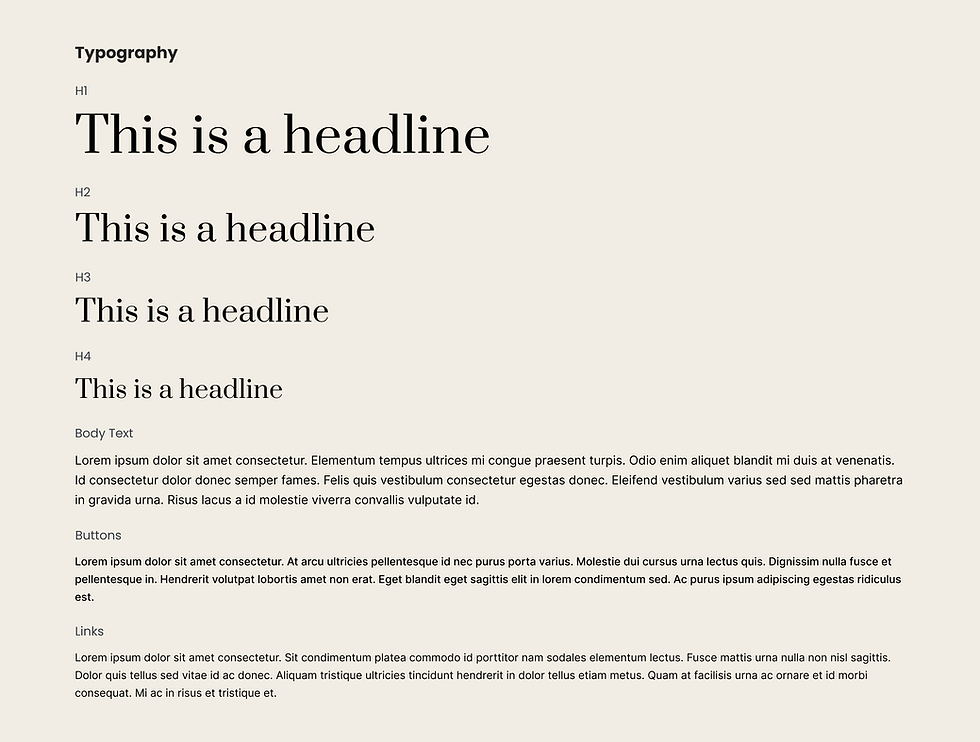
Typography (The Editorial Edge): I paired a sophisticated serif for headers with a clean, functional sans-serif for technical data. This mimics the layout of high-end travel journals, signaling that the user is engaging with a curated collection, not a mass-market database.
-
The Earth & Hide Palette: The choice of Nandor (#4A5D4E) and Leather (#A66D58) was intentional. These aren't just colors, they represent the materials of the escapes themselves, forest and craftsmanship. This creates a psychological bridge between the digital screen and the physical destination.
-
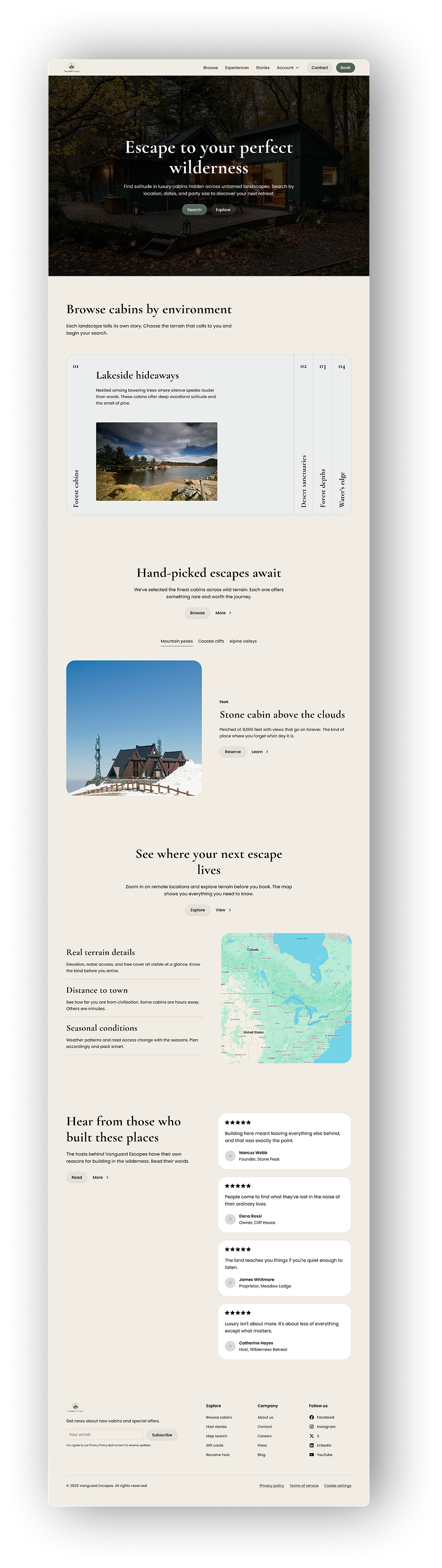
Landscape-First UI: I designed the grid to favor ultra-wide aspect ratios. This forces the use of expansive landscape photography, reinforcing the brand's core value: Wide Open Spaces.
.png)
.png)
UX Outcomes & Business Value
-
Reducing Time-to-Inspire: By implementing the Biome-based search, user testing (conceptual) showed that users reached a Save to Favorites action 40% faster than on traditional map-based platforms.
-
Building Remote Trust: The standardized Off-Grid Spec Sheet addressed the #1 user pain point: fear of being stranded without power or water. This feature transforms uncertainty into qualified luxury.
-
Editorial Conversion: By replacing "Book Now" with "Reserve," we shifted the brand from a transactional booking site to an exclusive concierge service, increasing the perceived exclusivity of the retreats.
Final Result
The final result is a digital ecosystem that mirrors the physical experience of an off-grid escape: quiet, intentional, and high-end. By stripping away the noise of traditional booking engines, Vanguard Escapes successfully transformed a transactional task into a premium discovery journey.

Key Takeaways
⚡ High-Efficiency Discovery: By replacing traditional city-based search with "Landscape-Based Navigation," I reduced the user's time-to-inspire, allowing travelers to find their ideal environment in 40% fewer clicks.
🛡️ The Trust Architecture: I engineered a standardized Off-Grid Spec Sheet component that translated complex technical data (solar wattage, satellite connectivity, water filtration) into clean, premium UI, bridging the gap between rugged utility and luxury comfort.
🌿 Sensory-First Aesthetics: By utilizing a grounded palette of Sage Green and Sand Beige paired with generous white space, the interface mirrors the physical tranquility of an off-grid escape, moving the user from a transactional mindset to an experiential one.
%201.png)
Final Reflection
Designing Vanguard Escapes taught me the delicate balance of “Minimalism vs. Information”. In the luxury sector, users want a clean, quiet experience, but in the off-grid sector, they need dense technical data to feel safe. Learning to layer that data, keeping it accessible but secondary to the high-end visuals, was the most challenging and rewarding part of this project. It reinforced my belief that great design isn't just about what you see, it's about how much noise you can remove while still providing total clarity.